
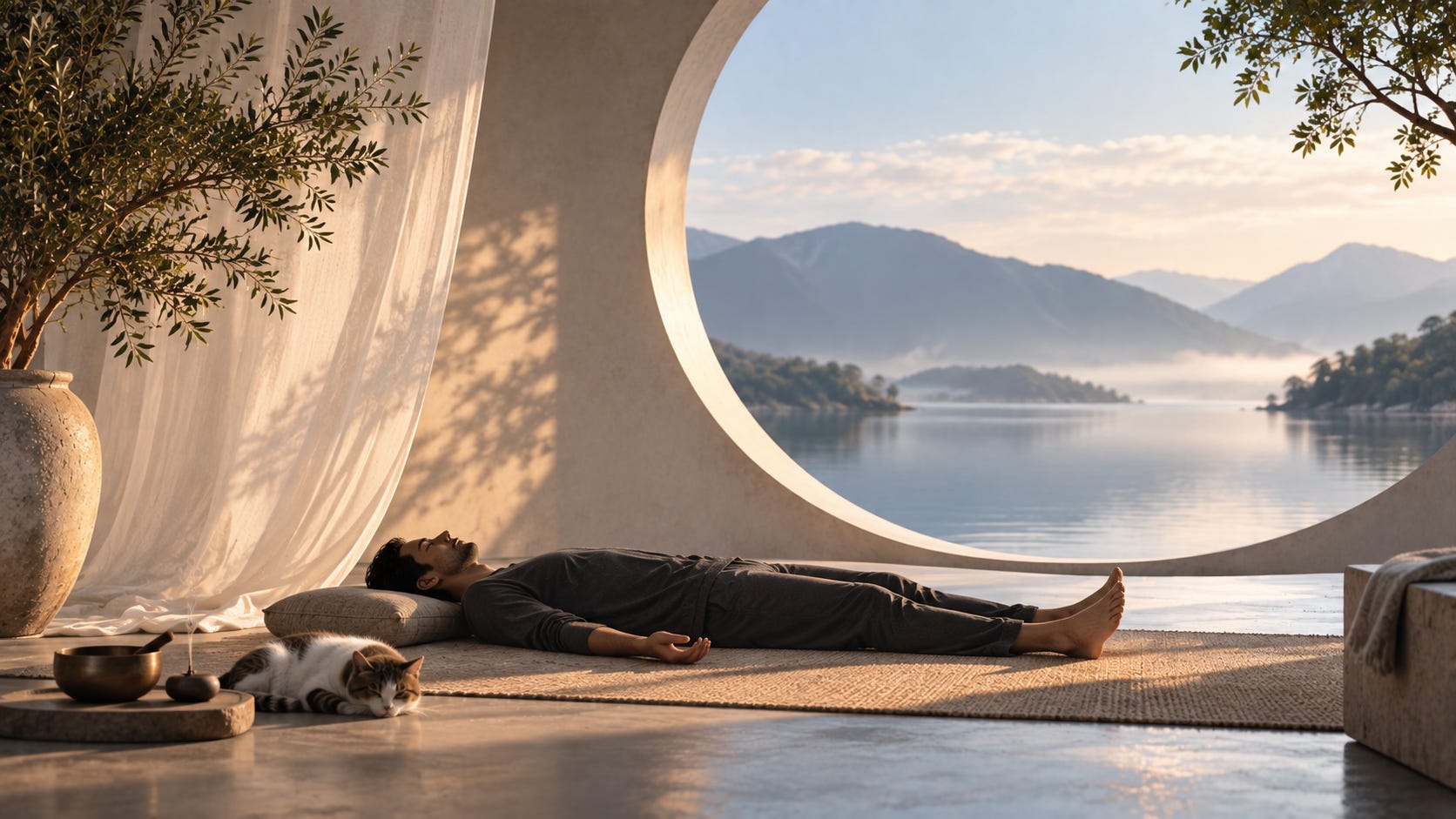
Modern life treats introversion like a bug. Networking events, open plan offices, group brainstorms, constant availability, all of it is built for people who gain energy from being around others. If you lose energy that way instead, the world has a habit of quietly suggesting you should work on that.
What Yoga Says About Turning Inward
Yoga philosophy sees it differently. One of the eight limbs of yoga is called pratyahara, the withdrawal of the senses. It is the deliberate turning of attention away from the outside world and back toward the inside, and it is not treated as avoidance. It is treated as a skill, one of the necessary steps on the way to deeper meditation.
An introvert is someone who tends toward that withdrawal naturally. Not because something is wrong, but because their nervous system is already oriented toward the inward direction that yogis spend years trying to train. That is not a flaw to correct. It is closer to a head start.
The trouble is not the tendency itself. It is a life that keeps demanding the opposite of it, without ever building in the recovery that pratyahara offers on purpose.
Five Ways to Recharge as an Introvert
1. Schedule your withdrawal, do not wait for it
Most introverts only turn inward once they are already depleted. Pratyahara works better as a scheduled practice than an emergency measure. Ten minutes with the door closed and no input, phone included, before you are running on empty rather than after.
2. Build a buffer around draining events
In an asana practice, effort is always followed by rest. Nobody expects you to move from one demanding pose straight into another with nothing in between. Treat a big social commitment the same way. Put unscheduled time on both sides of it, even fifteen minutes, so you are not walking straight from empty into full and back to empty again.
3. Use the breath to close the door
A few minutes of slow, extended exhales after a stimulating event tells the nervous system the alert is over. You do not need a formal pranayama practice for this. Longer out breath than in breath, repeated for a few minutes, is enough to start the shift out of the activated state.
4. Get curious about your own pattern instead of fighting it
Svadhyaya, self study, is another limb of yoga, and it is a useful one here. Instead of asking why you cannot be more outgoing, get specific. Notice what actually drains you and what does not. A dinner with one close friend is not the same as a party. Once you know your own shape, you can stop measuring yourself against a temperament that was never yours.
5. Try a guided withdrawal practice
Sometimes the easiest way to practice pratyahara is to be led through it rather than doing it alone. I recorded a guided meditation for exactly this, a body scan that draws your attention in from the limbs and the head and gathers it at the navel, restoring your energy from the inside rather than asking you to generate more of it.
Guided Meditation for Introverts: Relax Deeply and Recharge Free to watch and listen on YouTube.
None of these five things will turn you into an extrovert, and that was never the point. They simply give the part of you that already knows how to turn inward somewhere structured to do it, instead of leaving you to collapse into it only once you have nothing left.
What would you like me to sit with in a future post? Send me your questions and I will answer them here.
If this one landed somewhere, tap like or restack so it finds its way to someone else who needs it today.
Rishi
You can find more on YouTube and Insight Timer.